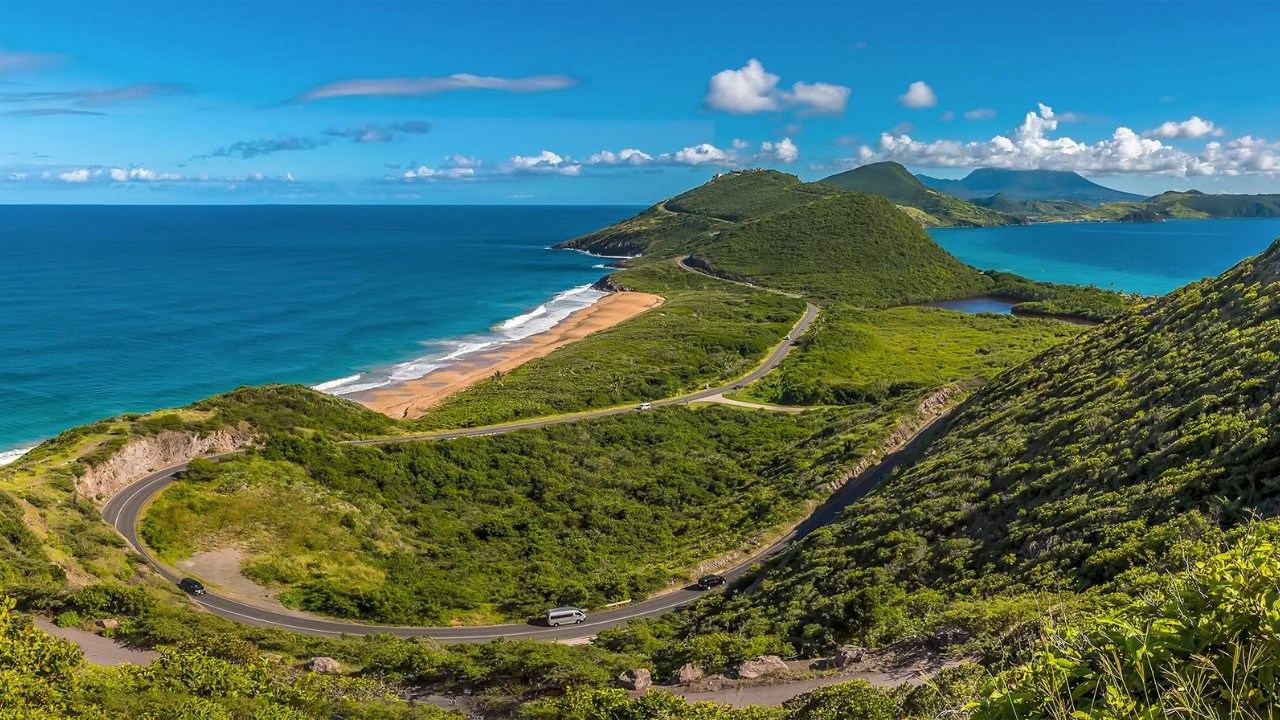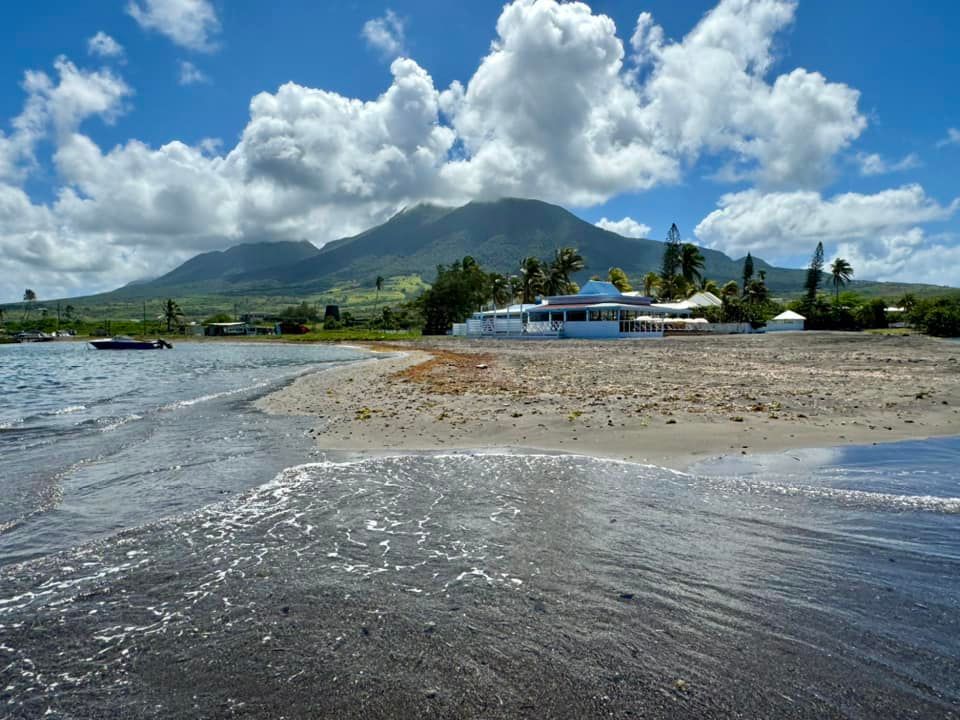
At the very top of St Kitts, where the Caribbean Sea and the Atlantic Ocean push against each other, sits a fishing village with a black sand beach that most visitors never see. Dieppe Bay is the quiet reward for anyone willing to drive 40 minutes from the cruise port, and it holds two distinctions no other beach on the island can claim: the sand is volcanic black, and the water in front of you is two seas meeting.
This is how to drive there, what you will find when you arrive, and how to fold the northern tip of the island into a driving day with your rental car.
How to Drive to Dieppe Bay
Dieppe Bay sits on the northern coast, roughly 18 miles from Basseterre. The island’s main road passes straight through the village, so you cannot miss it, and you have two ways to arrive:
The western route (35 to 40 minutes): Drive the Caribbean coast through Old Road Town and Sandy Point, passing Romney Manor and Brimstone Hill Fortress on the way. This is the culture-first approach: fortress in the morning, Dieppe Bay for lunch.
The eastern route (40 to 45 minutes): Drive the Atlantic side through Cayon and Saddlers, stopping at Black Rocks, which sits only a few minutes before Dieppe Bay. This is the volcanic coast approach: lava formations first, black sand beach second.
The best plan uses both: go up one coast, come back down the other, and the island’s full loop is yours. Roads are paved the whole way. Any rental car handles the drive comfortably. Parking in the village is free and informal, along the road near the beach.
What Makes the Beach Different
The sand is black. St Kitts was built by volcanoes, and at Dieppe Bay the shoreline shows it. The volcanic sand is dark, dramatic, and photographs beautifully against the blue water and the green bulk of Mount Liamuiga rising behind the village. One practical warning: black sand absorbs heat, and by midday it is genuinely hot underfoot. Bring water shoes or sandals for the walk to the water.
A reef keeps the water calm. A major reef sits offshore, absorbing the Atlantic’s energy before it reaches the bay. Inside the reef the water is calm, clear, and good for swimming and snorkelling, with tropical fish and the occasional Caribbean lobster among the coral heads. It is one of the most sheltered swimming spots on the northern half of the island.
Two seas meet in front of you. Dieppe Bay sits near the point where the Caribbean Sea and the Atlantic Ocean converge. On the right day you can watch waves moving in opposing directions and see the boundary in the water’s colour and texture. The nearby Gibbons Pasture viewpoint gives an elevated look at the convergence, and on clear days the volcanic silhouette of St Eustatius rises on the horizon to the north.
It is a working fishing village. Colourful wooden boats rest on the sand, anglers cast nets at the water’s edge, and the rhythm of the village is set by the catch, not the cruise schedule. This is the least touristy beach experience on St Kitts, and that is precisely its value.
A Beach with a 500 Year Story
Dieppe Bay is where European settlement of the eastern Caribbean began. In 1538, French colonists established a settlement here, decades before the British landed at Old Road Town in 1623. The colony lasted barely two weeks before Spanish forces destroyed it, but the point stands: this quiet fishing village is the oldest European settlement site in the eastern Caribbean. The village’s French name survives as the reminder.
Where to Eat
For a village this small, Dieppe Bay eats remarkably well:
- Reef Bar and Grill (Mugzy’s): Known to everyone on the island as Mugzy’s, this barbecue spot steps from the beach serves fresh-caught fish and cold Caribs, with the owner often having caught your lunch himself that morning. The definition of a local institution
- Arthur’s Restaurant and Bar: Fresh seafood, traditional goat curry, and island cooking with a view over the water where the two seas meet. The fish is caught the same morning it is served
- Coconut Tree Grill and Bar: Hearty portions and friendly charm, the reliable third option when the other two are busy
Everything operates on island time. Portions are generous, prices are gentler than the tourist strip, and formal attire does not exist here. For the wider island food picture, read Where to Eat in St Kitts by Car and our beach bar driving tour.
Building It into a Driving Day
The northern loop (5 to 6 hours): Leave Basseterre on the western coast, tour Brimstone Hill Fortress, continue north to Dieppe Bay for a swim and lunch at Mugzy’s or Arthur’s, then round the northern tip to Black Rocks and return down the Atlantic coast. This is the classic full-island circle with the north as its centrepiece.
The quiet day: If crowds are not your thing, skip the southeast peninsula entirely on a busy cruise day. Drive north, spend the morning at Dieppe Bay when the sand is coolest, lunch in the village, and take Black Rocks and the Atlantic coast on the way home. You will share the beach with fishermen and a handful of travellers instead of a thousand day-trippers.
For timings on the full circle, see the one day driving itinerary and best scenic drives.
Practical Tips
- Water shoes are near essential. The black sand gets hot by midday and parts of the shoreline are rocky
- Morning is the best time. Cooler sand, calmer light for photos, and the fishing boats coming in
- Bring cash. The village restaurants and bars prefer it
- No facilities on the beach itself. The restaurants cover food, drinks, and restrooms for customers
- Swim inside the reef. The protected water is calm, but do not venture beyond the reef line where the Atlantic takes over
- Combine with Black Rocks. The lava formations are only a few minutes away, and the barbecue chicken hut in the Black Rocks car park makes a fine second lunch option
- Respect the working beach. The boats, nets, and catch belong to the village. Photograph freely, but ask before getting close to the boats
A note on prices: restaurant costs and opening patterns in a small fishing village change with the season and the catch. Treat the details here as a planning guide and confirm locally before making a special trip.
Frequently Asked Questions
Why is the sand black at Dieppe Bay?
The sand is volcanic. St Kitts was formed by volcanic activity, and the northern beaches nearest Mount Liamuiga carry the dark volcanic sand that proves it.
Can you swim at Dieppe Bay?
Yes. A major offshore reef shelters the bay, keeping the water inside calm and clear for swimming and snorkelling. Stay inside the reef line.
How far is Dieppe Bay from Basseterre?
Roughly 18 miles. The drive takes 35 to 45 minutes whether you take the Caribbean or Atlantic coast route, and combining both makes the classic island loop.
Where do the Caribbean and Atlantic meet in St Kitts?
Near the island’s northern tip by Dieppe Bay. On the right day you can see the two bodies of water pushing against each other, and the Gibbons Pasture viewpoint gives an elevated view.
What is Mugzy’s?
The local name for Reef Bar and Grill, the barbecue spot beside Dieppe Bay beach where the owner often catches the fish he serves.
Is Dieppe Bay worth visiting?
If you value quiet, authenticity, and scenery over facilities and crowds, it is one of the most rewarding stops on the island, especially combined with Black Rocks and the northern loop.