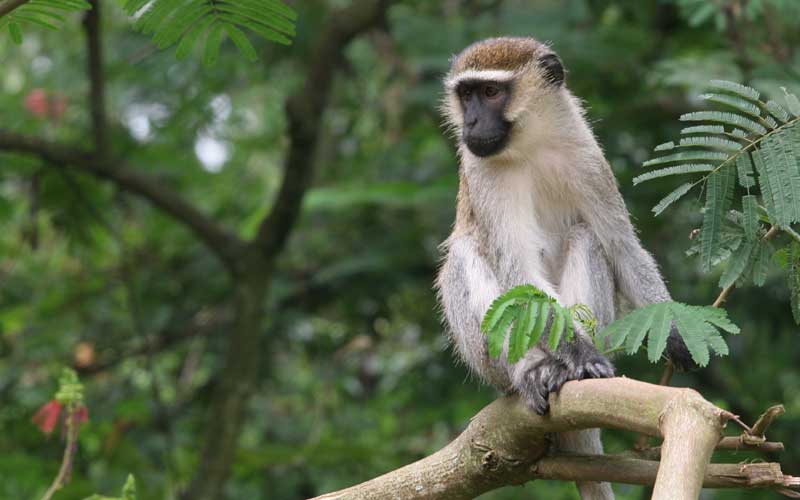
The first troop appears before you have finished your coffee. Quarter past seven, the road out of Frigate Bay still cool and quiet, and there they are on the guardrail: a dozen green vervet monkeys, silver-grey fur catching the early light, a mother with an infant clinging underneath, two juveniles wrestling on the verge. You slow the car to a crawl. Nobody moves. The big male watches you with an expression that suggests you are the attraction here, not him.
This is the thing about monkeys in St Kitts: you do not need a tour or a preserve to meet them. You need a rental car, an early start, and a rough idea of where the troops spend their mornings. This article is that idea.
How an African Monkey Ended Up Owning a Caribbean Island
The vervets are not native. They crossed the Atlantic in the 1600s aboard ships from West Africa, some as pets and mascots, and the ones that escaped found an island with fruit, no predators, and 68 square miles of room. Three centuries later their descendants are everywhere, with estimates running into the tens of thousands. Kittitians will tell you, only half joking, that the monkeys may outnumber the people. Whatever the true count, no other easily reached Caribbean island offers wild primate encounters this reliably, and none lets you do it this cheaply: the price of a morning’s fuel.
The Morning Circuit
Vervets feed in the first two hours after sunrise and again in the late afternoon, resting through the heat of the day. Your best monkey drive is therefore the earliest one, and the richest ground is the southeast peninsula.
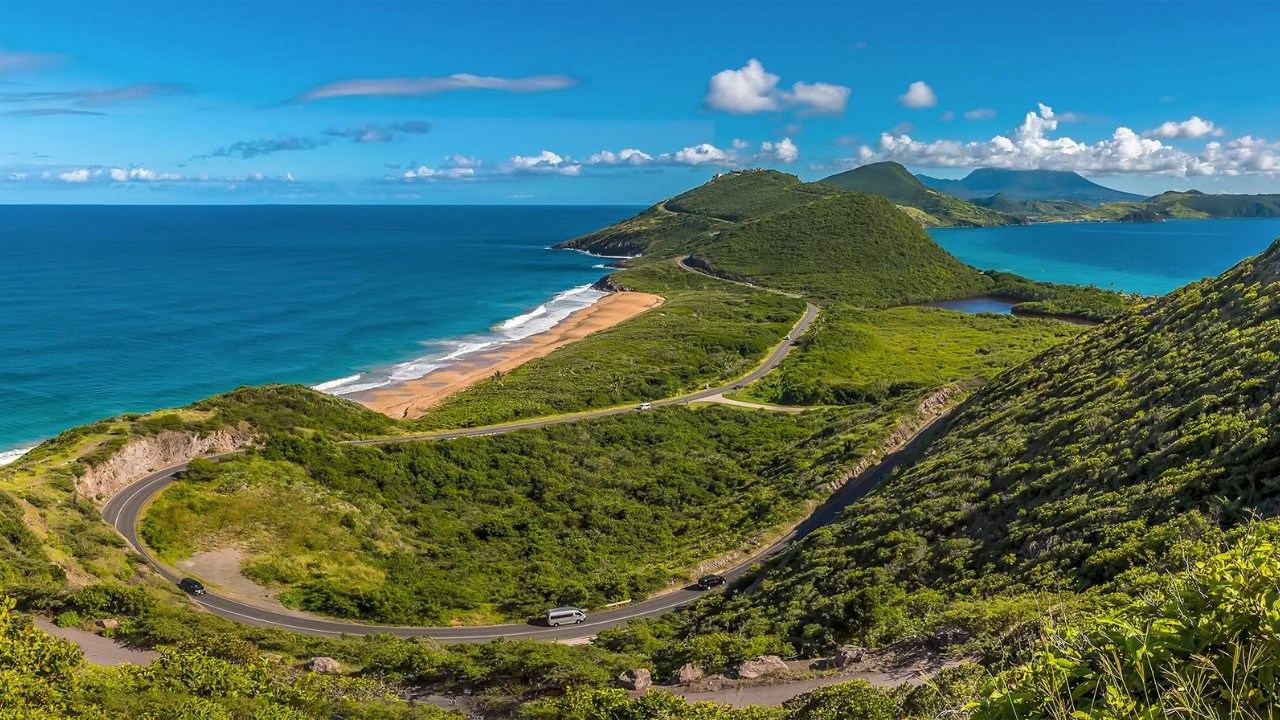
Leave Basseterre or Frigate Bay by 7 and take the peninsula road south. This is where travellers report the classic encounter, an entire extended family spread along the roadside, grooming, squabbling, turning over stones for insects, utterly unbothered by a parked car. The stretch between Timothy Hill and Cockleshell Beach runs through exactly the scrubby, less-populated country vervets love. Drive it slowly with the windows down and you will hear troops before you see them, a rustle and chatter moving through the seagrape.
Pull over only where the road allows, stay near the car, and let the monkeys set the distance. They tolerate people wonderfully at ten feet and change their minds entirely at five.
Timothy Hill, and the Men with the Monkeys
You will end up at the Timothy Hill lookout anyway, because everyone does, and the two-oceans view deserves its fame. Some mornings wild troops move across the hillside below the platforms, a bonus on top of the island’s best photograph.
At the lookout and around the cruise port you will also meet the island’s primate handlers, young men with monkeys riding calmly on an arm, a shoulder, sometimes a head, offering photos for a fee. The internet loves to sneer at this, usually after a ninety second stop, so here is the fuller local picture. Many of these monkeys were rescued, found orphaned as babies or born into a handler’s care, and hand-raised. The good handlers know their animals the way farmers know theirs, and it shows in how relaxed the monkeys are around crowds. The men themselves are usually from the rural villages, providing for children and families with the work, and plenty of visitors count the moment a vervet settles onto their shoulder among the best memories of the trip.
So the honest advice is simply this: if the experience appeals to you, enjoy it without guilt, and agree the price before the camera comes out, since that is how business is done at the lookout. If you would rather meet monkeys on their own terms, the wild version is fifty yards away in the trees, and the rest of this article is your map to them. The island happily offers both.
Where the Troops Spend the Rest of the Day
The beach bars of the peninsula. Monkeys long ago worked out where the french fries are. Around South Friars Bay and the Cockleshell strip they patrol the treeline behind the bars, waiting for an unguarded plate. Entertaining to watch, and the reason you never leave food open on your beach chair.
The golf course. Guests at the Marriott regularly watch troops crossing the fairways at Royal St Kitts, one of the stranger wildlife-viewing venues in the Caribbean.
The rainforest edge. On the western side, Romney Manor and the Wingfield Estate sit right against the forest, and troops move through the grounds often enough that a batik stop doubles as a monkey stop. Single monkeys turn up along the Brimstone Hill road too, materialising on the fortress walls like they bought tickets.
The northeast farmlands. Driving the full island loop, the stretch from Black Rocks down through Saddlers and Cayon crosses open farming country where animals of every kind use the road freely. Monkeys included, usually at a sprint, so keep your speed honest through here.
The Part Tourists Rarely Hear
Loving the monkeys is a visitor’s luxury. For Kittitian farmers they are a daily war, raiding mangoes, melons, and whole vegetable plots with a cleverness that fences barely slow. The island’s relationship with its most famous residents is complicated in the way these things always are: a national symbol, a tourism draw, and an agricultural headache wearing the same silver fur. Worth remembering when you are cooing at the roadside: the man in the pickup behind you may take a dimmer view.
It is also the strongest reason for the one real rule of monkey watching here: never feed them. Fed monkeys learn that humans mean food, and that lesson creates the bold, bag-snatching behaviour that gets animals into conflict and gets tourists bitten. Watch as long as you like, photograph everything, give them nothing.
Making the Monkey Morning Work
The plan that reliably delivers: out by 7, peninsula road south with slow passes and windows down, Timothy Hill while the light is still golden and the cruise crowds have not landed, then breakfast, and the beach day begins where the monkey drive ends, at Cockleshell or South Friars by mid morning. The whole circuit is under an hour of driving. Late afternoon offers a second window on the same roads if the morning was quiet, and a sunset run over the peninsula with monkeys crossing in the low light is about as good as a rental car day gets. In the deep off season troops range further from the roads, so give it two passes before declaring defeat, and remember the animals did not read this article. The driving rules guide covers everything else, and the one day itinerary shows where the monkey hour fits in a cruise call.
If you do choose a paid monkey photo at the lookouts, agree the price before anyone’s camera comes out.